
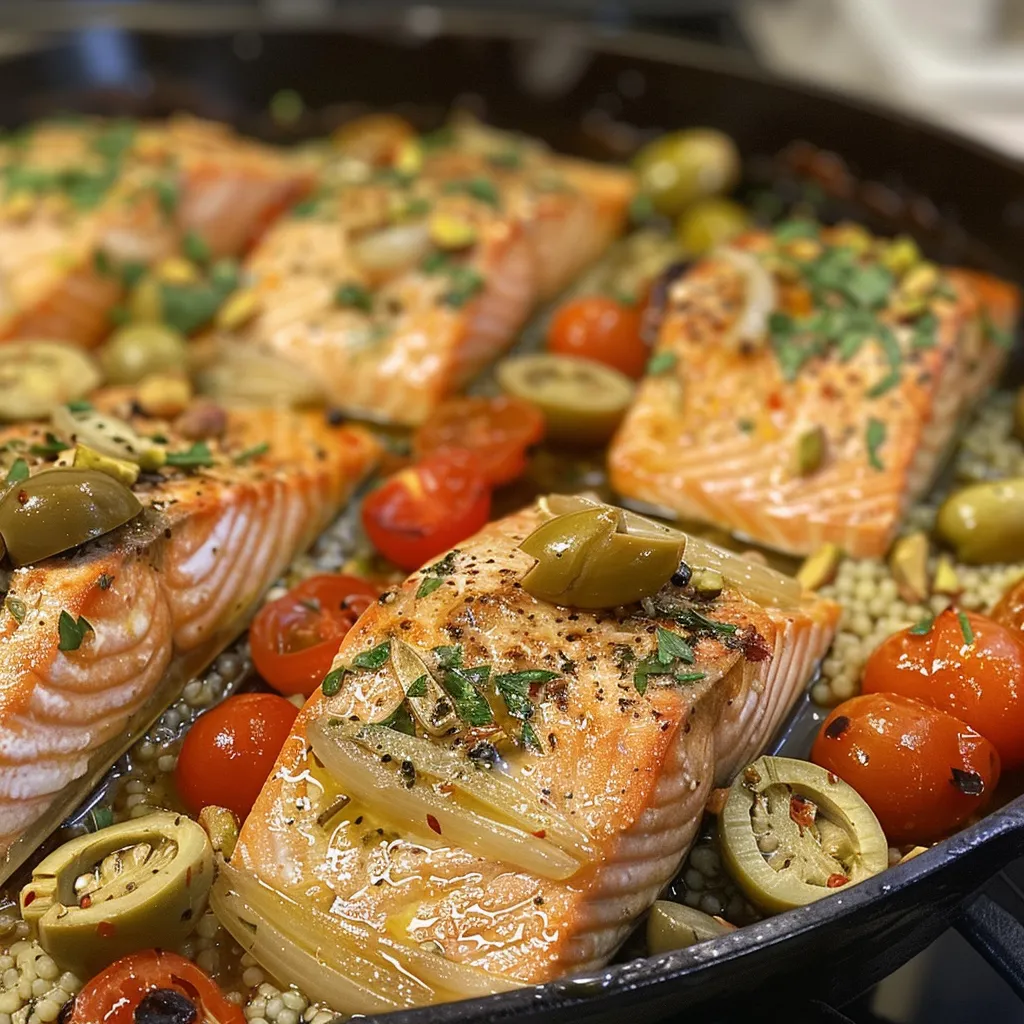
![['Close-up view of a Mediterranean salmon skillet with colorful ingredients.', 'Juicy salmon fillets nestled among cherry tomatoes and fennel in a skillet.', 'A vibrant Mediterranean-style dish featuring salmon and couscous, garnished with parsley.', 'Side perspective of a skillet filled with salmon, vegetables, and olives ready to serve.']](https://yumswift.com/wp-content/uploads/2026/06/u6426281249_close_up_photo_side_view_from_reddit._taken_with__18ed73ef-6793-4c15-8b07-9305bf43623d_0.webp "Savoring Sunshine: The Mediterranean Salmon Skillet That Ignites My Kitchen")
Unleashing the Flavors of the Mediterranean: Your Ultimate Salmon Skillet Guide
Welcome to a culinary adventure that will transport you straight to sun-kissed shores and bustling markets filled with the vibrant colors and aromas of the Mediterranean! Today, we’re diving into the world of Mediterranean salmon with a recipe that will not only delight your taste buds but also celebrate the essence of togetherness. With fresh ingredients like fennel, cherry tomatoes, olives, and a touch of harissa, this salmon skillet is a dish that brings family and friends together around the table. Let’s get cooking!
Why You’ll Love This Recipe
This Mediterranean Salmon Skillet is more than just a meal; it’s an experience! Here are some reasons why this recipe will become a staple in your kitchen:
- Quick and Easy: This dish comes together in just 30 minutes, making it perfect for busy weeknights or impromptu gatherings.
- One-Pan Wonder: Enjoy minimal cleanup with everything cooking deliciously in a single skillet.
- Flavor Explosion: The combination of fennel, cherry tomatoes, and olives creates a vibrant flavor profile that’s both fresh and satisfying.
- Healthy and Nutritious: Packed with omega-3 fatty acids from the salmon and a rainbow of vegetables, this dish promotes health without sacrificing taste.
- Customizable: With easy variations and substitutions, you can make this dish your own!
Ingredient Breakdown
Let’s explore the ingredients that bring this dish to life, along with some helpful substitutions:

★ Recommended Kitchen Tool
Nonstick Grill Pan
Make this recipe even easier with a quality Nonstick Grill Pan — a must-have kitchen staple!
- Salmon Fillets: Use fresh, skin-on salmon fillets for the best flavor. If you’re looking for a budget-friendly option, you can substitute with trout or tilapia.
- Kosher Salt: Essential for seasoning; if unavailable, sea salt works well too.
- Black Pepper: Freshly cracked pepper adds a delightful kick. Avoid pre-ground for the best flavor.
- Extra-Virgin Olive Oil: This is key for sautéing and drizzling; opt for high-quality oil for rich flavor.
- Fennel Bulbs: These add an anise-like flavor; if you can’t find fennel, use leeks or celery as substitutes.
- Cherry Tomatoes: Their sweetness enhances the dish; grape tomatoes can be a great alternative.
- Harissa Paste: A North African chili paste that adds depth; feel free to use sriracha or a homemade chili paste if you prefer.
- Israeli Couscous: Adds a wonderful texture; for gluten-free options, quinoa or brown rice work well.
- Pitted Green Olives: They bring saltiness and additional flavor; Kalamata olives can be used for a different taste.
- Pistachios: For crunch and flavor; almonds or walnuts can substitute in a pinch.
- Fresh Parsley: Adds brightness; swap with cilantro for a different flavor profile.
- Garlic: Essential for that warm Mediterranean base; crushed garlic or garlic powder can work too.
- Chili Flakes: For a hint of heat; omit if you prefer a milder dish.
- Fresh Lemon Juice: Brightens the dish; lime juice is a suitable alternative.
- Additional Salt: To taste; always adjust according to your preference.
Step-by-Step Instructions
Now that we have everything ready, let’s dive into the cooking process!
- Start by patting the salmon fillets dry with a paper towel. Season the flesh evenly with 1/2 tsp. of salt and 1/4 tsp. of pepper.
- Heat 2 tablespoons of olive oil in a large skillet (preferably cast-iron) over medium-high heat. Once hot, arrange the salmon fillets, skin side down, in the pan. Cook for 3-4 minutes, until the skin easily releases from the pan.
- Gently flip the fillets, lower the heat to medium, and cook until the salmon is cooked through and flakes easily with a fork, about 3-4 more minutes. Transfer the salmon to a plate and cover with foil to keep warm.
- Add the fennel wedges to the skillet and cook until brown on the bottom, about 3 minutes. Add the cherry tomatoes, tossing them with the fennel and oil. Continue cooking until the fennel softens and the tomatoes blister, about 3 more minutes.
- Stir in the harissa and couscous; cook, stirring frequently, until the grains are lightly toasted, about 2 minutes.
- Add 1 1/2 cups of water, remaining 1/2 tsp. of salt, and 1/4 tsp. of black pepper. Bring the mixture to a boil. Once boiling, reduce heat to medium-low, cover, and cook until most of the water is absorbed and the couscous is tender, about 12-14 minutes.
- While the couscous cooks, prepare the olive-pistachio salsa by combining olives, pistachios, parsley, garlic, chili flakes, olive oil, lemon juice, and salt; mix well.
- Once the couscous is cooked, remove the lid and nestle the salmon fillets back into the pan. Continue cooking uncovered for 2 more minutes to warm the salmon. Spoon the olive-pistachio salsa over the salmon, and serve immediately.
Pro Tips for Perfect Mediterranean Salmon
To elevate your dish, consider these expert insights:
- Don’t Overcook the Salmon: The key to juicy salmon is ensuring it’s cooked just right. Aim for an internal temperature of 140°F before resting.
- Season Generously: Don’t be shy with salt and pepper; they enhance the natural flavors of the salmon and vegetables.
- Experiment with Herbs: Fresh herbs like dill, basil, or mint can add an exciting twist to the salsa or couscous.
- Use High-Quality Olive Oil: A good olive oil can transform the dish; look for one with a rich, fruity flavor.
- Try Different Grains: If couscous isn’t your favorite, consider using farro, quinoa, or even orzo for variation.
- Serve Hot: Enjoy this dish immediately while the flavors are at their peak!
- Garnish Wisely: A sprinkle of extra herbs or a pinch of citrus zest can brighten the presentation.
- Make-Ahead Tips: Prep the salsa and chop the veggies in advance for a quicker cooking time during dinner.
Common Mistakes and Troubleshooting
Even the best chefs make mistakes! Here are some common pitfalls and how to avoid them:
- Overcooked Salmon: Keep an eye on the time and temperature; it’s better to check early than to risk dry fish.
- Undercooked Couscous: If your couscous is still firm after cooking, add a splash more water and continue cooking.
- Too Much Salt: If you oversalt, balance with a squeeze of lemon or a bit of sugar.
- Not Enough Flavor: If the dish lacks flavor, consider adding more herbs or spices during cooking.
Delicious Variations to Try
Get creative with these fun variations of the Mediterranean salmon skillet:
- Spicy Mediterranean Salmon: Increase the amount of harissa for an added kick.
- Vegetable Medley: Incorporate additional vegetables like bell peppers, zucchini, or spinach for more color and nutrition.
- Grilled Version: Instead of pan-searing, grill the salmon for a smoky flavor.
- Creamy Couscous: Stir in a tablespoon of cream cheese or Greek yogurt into the couscous for a rich texture.
Storage and Make-Ahead Instructions
This Mediterranean salmon skillet is perfect for meal prep. Here’s how to store and reheat properly:
- Storage: Store leftovers in an airtight container in the refrigerator for up to 3 days.
- Reheating: Reheat gently in the microwave or on the stovetop with a splash of water to prevent drying out.
- Make-Ahead: Prepare the salsa and vegetables a day in advance. You can also pre-cook the couscous and reheat it with the salmon.
FAQs About Mediterranean Salmon
Here are some frequently asked questions to enhance your cooking experience:
- Can I use frozen salmon? Yes, just ensure it’s fully thawed before cooking for even results.
- What can I serve with this dish? Pair it with a fresh green salad or crusty bread to soak up the delicious juices.
- How do I know when the salmon is done? The salmon is done when it flakes easily with a fork and is opaque in the center.
- Can I freeze leftovers? Yes, but the texture may change. Store in a freezer-safe container for up to 2 months.
- Is this dish gluten-free? Yes, if you use gluten-free couscous or grains.
- Can I make this dish vegetarian? Absolutely! Replace salmon with grilled eggplant or portobello mushrooms.
- What’s the best way to reheat couscous? Add a splash of water while reheating to maintain moisture.
- How can I add more vegetables? Feel free to toss in any seasonal vegetables that you enjoy!
Nutritional Tips and Dietary Adaptations
This Mediterranean salmon skillet is naturally healthy! Here’s how to adapt it for various diets:
- Low-Carb Option: Skip the couscous and serve salmon over a bed of sautéed greens.
- High-Protein Version: Add chickpeas or lentils to the couscous for a protein boost.
- Dairy-Free: Ensure all ingredients are dairy-free, particularly any toppings or sauces used.
Essential Equipment Recommendations
To make your cooking experience seamless, consider these essential tools:
- Cast-Iron Skillet: Perfect for even heat distribution and a great sear on the salmon.
- Meat Thermometer: Ensures your salmon is cooked to perfection.
- Cutting Board: A sturdy surface for prepping your ingredients.
- Sharp Knife: For effortless cutting of vegetables and herbs.
- Mixing Bowls: Great for preparing the salsa and mixing ingredients.
Serving Suggestions
Present your gorgeous Mediterranean salmon skillet with flair by considering these serving suggestions:
- Garnish with Fresh Herbs: A sprinkle of parsley or dill adds a fresh touch.
- Serve Family-Style: Place the skillet in the center of the table for a communal dining experience.
- Pair with Wine: A chilled white wine like Sauvignon Blanc complements the dish beautifully.
- Offer Lemon Wedges: A squeeze of fresh lemon juice enhances the flavors!
Final Thoughts
Cooking is a celebration of life, culture, and connection, and this Mediterranean salmon skillet encapsulates that spirit perfectly. With its vibrant flavors, healthful ingredients, and the joy of sharing a meal, it’s sure to become a cherished recipe in your home. So gather your loved ones, set the table, and let the feast begin! Happy cooking!
Mediterranean Salmon Skillet
Ingredients
Salmon
- 4 oz. salmon fillets
- 1 tsp. kosher salt, divided
- 0.5 tsp. black pepper, divided
- 2 Tbsp. extra-virgin olive oil
Fennel
- 2 medium fennel bulbs (cut into 1/2-inch wedges)
- 1 pint cherry tomatoes
Harissa Paste
- 2 Tbsp. mild harissa paste (such as Mina brand)
Couscous
- 1 cup dry Israeli (or pearl) couscous
Olives and Pistachios
- 3 Tbsp. pitted and finely chopped green olives (such as Castelvetrano olives)
- 3 Tbsp. finely chopped pistachios (preferably roasted and salted)
- 2 Tbsp. minced fresh parsley
- 1 clove garlic, minced or grated
- 0.25 tsp. chili flakes
- 0.25 cup extra-virgin olive oil
- 2 Tbsp. fresh lemon juice
- 0.25 tsp. salt
Instructions
-
Season salmon with 1/2 tsp. salt and 1/4 tsp. pepper. Heat 2 Tbsp. oil in a skillet over medium-high, cook salmon skin-side down for 3-4 minutes, flip and cook 3-4 more minutes. Transfer to a plate and cover with foil.
-
Add fennel to the skillet, cook until browned, then add tomatoes and cook until blistered. Stir in harissa and couscous; toast for 2 minutes. Add water, remaining salt and pepper, boil, then simmer covered for 12-14 minutes.
-
Prepare salsa by mixing olives, pistachios, parsley, garlic, chili flakes, olive oil, lemon juice, and salt. Once couscous is cooked, nestle salmon back into the pan, cook uncovered for 2 minutes, then spoon salsa over and serve.

![['A close-up side view of a Baked Tuscan Chicken Casserole with melted cheese and sun-dried tomatoes.', 'Juicy Baked Tuscan Chicken Casserole displayed in a dish, showcasing layers of chicken and creamy sauce.', 'A vibrant close-up of a Baked Tuscan Chicken Casserole, highlighting its cheesy, golden top and colorful ingredients.', 'Freshly baked Tuscan Chicken Casserole with visible spinach and sun-dried tomatoes, served in a ceramic dish.']](https://yumswift.com/wp-content/uploads/2026/06/baked-tuscan-chicken-casserole_1_U1-150x150.webp)